
Great Piano Trios for a Quiet Evening

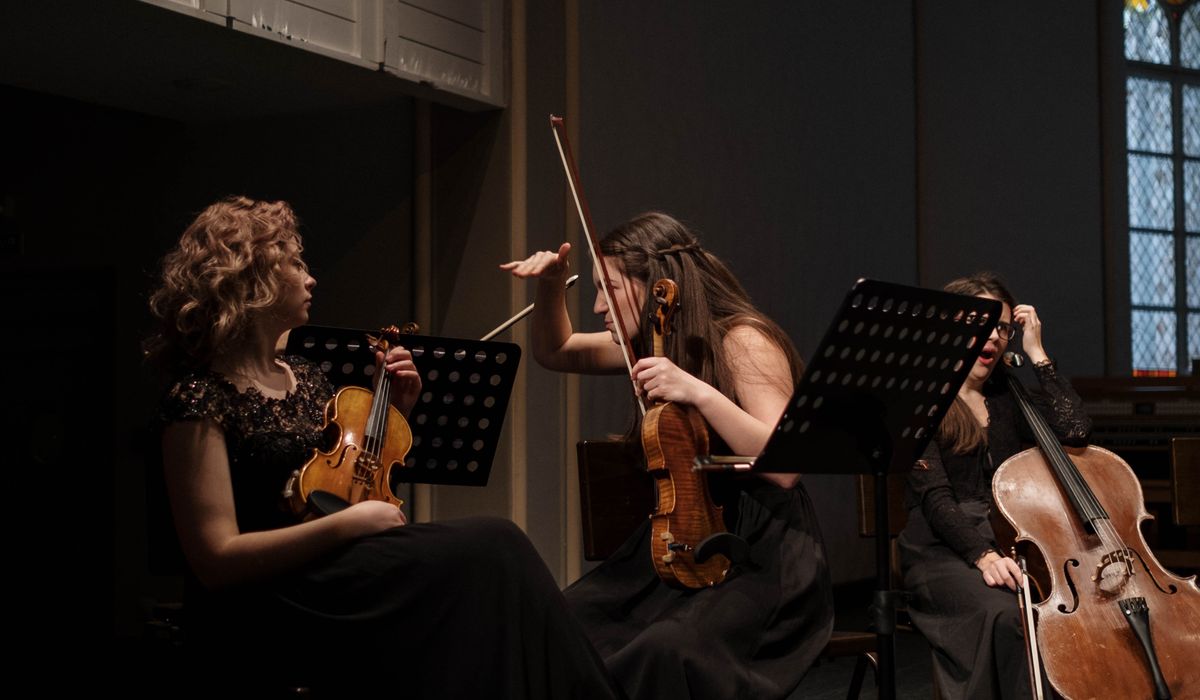
Why the Piano Trio Suits a Quiet Evening
Of all the chamber combinations, the piano trio — violin, cello and piano — is the most forgiving companion for an evening at home. It has the harmonic depth of a keyboard instrument, the singing line of a violin and the warm, human register of a cello, but it never grows as loud or as crowded as a quartet in full flight. Three voices are easy to follow. You can let the piano hold your attention for a while, drift to the cello, then return. Nothing is lost if your mind wanders for half a minute; the music will still be there when you come back.
These works also tend to sit in a comfortable dynamic range. Much of the writing is intimate rather than grand, which means you can play it at a modest volume without losing detail — an important consideration if you live in a flat or share a wall with neighbours.
Setting the Room, Setting the Volume
A few practical adjustments make an enormous difference.
- Light low, but not dark. One lamp behind your chair is enough. You want to be able to glance at a sleeve note without squinting, but you do not want a bright screen or overhead light pulling your eyes away from the sound.
- Sit slightly off-centre between speakers if you are using a hi-fi. Dead centre can make the violin feel pinned to one spot; a small offset lets the three instruments spread out.
- Play it quieter than you think. Chamber music rewards a low setting. If you can hear the piano's pedals release, you are probably about right.
- Listen to one movement at a time, at least to begin with. A full trio can run to forty minutes. A single slow movement is a complete experience in itself.
Three Excellent First Trios
If you are new to the repertoire, begin with these.
- Beethoven: Piano Trio in B-flat, Op. 97 ("Archduke"). The opening movement is broad, genial and unhurried; the Scherzo is a gentle joke; and the Andante cantabile is one of the loveliest sets of variations ever written for the combination. This is the work most likely to convert a sceptical listener.
- Schubert: Piano Trio No. 1 in B-flat, D. 898. Lyrical from the first bar, with a slow movement that seems to breathe. Schubert never hurries. Ideal for an evening when you want to stop watching the clock.
- Mendelssohn: Piano Trio No. 1 in D minor, Op. 49. Warmer and more animated than the key suggests, with a song-like Andante and a finale full of good humour. A fine choice if you want energy without aggression.
Slow Movements to Sink Into
When the evening calls for something slower still, these are reliably rewarding.
- Beethoven: Piano Trio in D, Op. 70 No. 1 ("Ghost"). The second movement is hushed, strange and quietly unsettling — perfect for low lighting. Do not play it as background; it asks for attention.
- Brahms: Piano Trio No. 2 in C, Op. 87. The Andante con moto unfolds with a gentle rocking motion, the violin and cello trading phrases over a patient piano.
- Dvořák: Piano Trio No. 4 in E minor, Op. 90 ("Dumky"). Six short movements alternating melancholy and dance. The slow sections are deeply tender; the fast ones are a lift, not a jolt.
- Fauré: Piano Trio in D minor, Op. 120. Late, autumnal and refined — music for the last hour of the day rather than the middle of a party.
Building an Evening's Programme
You do not need to play a whole trio from start to finish. A satisfying hour might look like this: a genial first movement to settle in, one slow movement from a different work, a short break, then a complete trio to finish. If you prefer a single continuous listen, try Schubert's B-flat Trio followed by the Fauré — roughly an hour of music that moves from open-hearted to reflective.
Vary the keys and moods rather than the volume. Two warm major-key works in a row can blur together; placing a minor-key slow movement between them restores the contrast.
What to Listen For as You Go
- Who has the melody, and who is accompanying. In a good performance this changes constantly, often mid-phrase.
- The handover moments. A phrase passed from cello to violin, or from piano to strings, is the heart of the trio texture.
- The piano's left hand. It supplies the harmonic floor. Notice how little it needs to do to hold everything up.
- Silence. Rests and fermatas are part of the design. Let them pass without filling them.
Above all, resist the urge to be productive while you listen. Put the phone in another room, settle into the chair and let a single movement run its course. The piano trio is generous music: it gives back exactly as much as you are willing to give it, and an unhurried evening is all the preparation it needs.

Joeby Ragpa
This template is so awesome. I didn’t expect so many features inside. E-commerce pages are very useful, you can launch your online store in few seconds. I will rate 5 stars.
ReplyAlexander Samokhin
This template is so awesome. I didn’t expect so many features inside. E-commerce pages are very useful, you can launch your online store in few seconds. I will rate 5 stars.
ReplyChris Root
This template is so awesome. I didn’t expect so many features inside. E-commerce pages are very useful, you can launch your online store in few seconds. I will rate 5 stars.
Reply