
How to Follow the Voices in a String Quartet

Start with where everyone is sitting
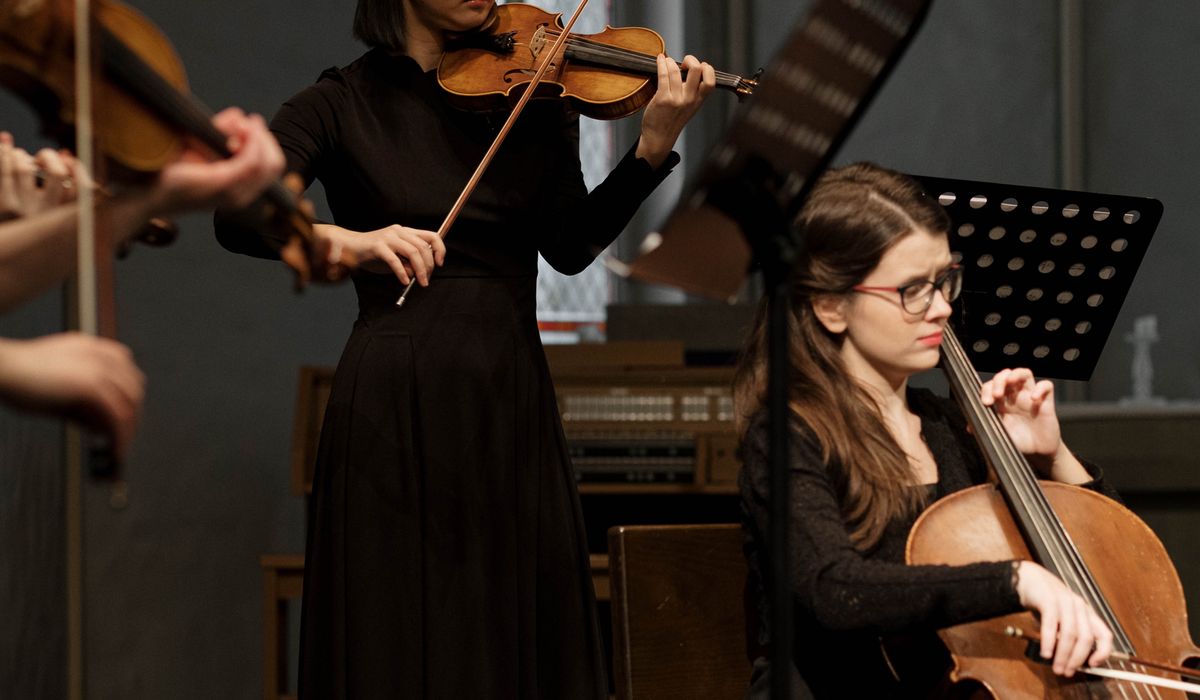
Before you try to hear four separate lines, spend a moment looking. Most string quartets arrange themselves with the first violin on your left and the second violin on your right, with the viola and cello filling the space between them — though many ensembles now put the cello centre stage, facing you, with the viola just to their right. The layout is not fixed, and players often shift it to suit the hall. What matters is that you know which body belongs to which sound.
Watching helps enormously. A player leans in before a phrase begins. Bows move in long, smooth strokes when a line sings and in short, springy ones when it accompanies. If you can see the players, you will hear them sooner. If your seat gives you a side-on view, so much the better: the instruments nearest you will always come through most clearly.
Learn the four jobs, not just the four instruments
A quartet is a conversation with clearly divided roles, and the roles shift constantly. As a rough map:
- First violin — usually the top line and the melody, in the highest register and the most exposed. When the tune is in the soprano, this is where you will find it.
- Second violin — often harmony, rhythmic figures and off-beat punctuation, but frequently handed the tune as well. It is not the second-best seat; it is the seat that keeps everything glued together.
- Viola — the alto voice, warmer and slightly reedy in colour. It supplies inner harmony, countermelodies and the quiet sustained notes that make the harmony feel rich rather than thin.
- Cello — the bass, the harmonic floor. It may walk, sing, or hold a single note for bars on end, and it very often carries the melody in slow movements.
Knowing these jobs gives you something to listen for. Instead of a wall of strings, you get four sets of intentions.
Follow the tune as it changes hands
In most quartets the melody is passed around like a baton, and catching the handover is the single most satisfying listening skill you can develop. A useful rule of thumb: the tune is usually the line moving in longer, shapelier phrases, while the others play repeated, rocking or bustling patterns underneath. When the texture suddenly thins to one instrument, that instrument almost always has the tune.
Try this with a Haydn quartet. Hum the opening theme to yourself and notice the exact moment your line falls silent and someone else takes it up — often at the same pitch, or a fourth or fifth away, in a quick echo. Mozart does the same trick more slyly, hiding the tune in the viola while the first violin plays decorative figuration above it. Once you have spotted one handover, you will start hearing them everywhere, and the music becomes a chase rather than a blur.
Let the cello be your compass
If you lose your bearings, drop your attention to the bottom. The cello tells you where the harmony is standing, and its notes are usually the roots and fifths that hold a chord in place. Follow the bass for a minute and you will feel the music's geography: when it steps firmly downwards, the harmony is settling; when it climbs chromatically, tension is building.
This is especially rewarding in slow movements. Hum the cello line quietly under your breath — many concertgoers do, silently — and you will find the upper parts suddenly make sense as decoration hung on a clear frame. In Shostakovich and Britten, the cello is frequently the emotional centre of gravity, and following it is closer to following the argument than following the melody.
Then give the middle voices your full attention
The viola and second violin are the last voices most listeners learn to hear, and the most rewarding. On a second hearing of a piece you know, chase them exclusively. Listen for the viola's countermelody underneath a famous first-violin tune, or the second violin's syncopated nudges that give a passage its forward lean. Once you can pick out the inner parts, a familiar quartet becomes a much bigger piece of music.
Good places to start: the slow movement of Mozart's "Dissonance" Quartet, where the viola sighs beneath the melody, and any of the Borodin or Dvořák quartets, where the inner writing is generous and easy to follow.
Where to sit, and how to practise at home
In a live hall, closer seats give you detail and bow noise; further back gives you blend. A resonant church will smear the inner parts, so sit well forward there. In a drier, modern hall, aim for the middle. If the quartet offers a side-on layout, sitting nearer the viola will make the inner voices pop.
At home, work in passes. Listen to a movement once for pleasure, then again tracking only the cello, then only the viola. Choose recordings with a clear stereo image rather than a lush, blended one — separation is your friend while you are learning. Pick a handful of works and return to them for months: Haydn's "Emperor" Quartet, Mozart's K. 465, Beethoven's Op. 18 No. 4. Familiarity is what turns four players into four voices you can name.

Joeby Ragpa
This template is so awesome. I didn’t expect so many features inside. E-commerce pages are very useful, you can launch your online store in few seconds. I will rate 5 stars.
ReplyAlexander Samokhin
This template is so awesome. I didn’t expect so many features inside. E-commerce pages are very useful, you can launch your online store in few seconds. I will rate 5 stars.
ReplyChris Root
This template is so awesome. I didn’t expect so many features inside. E-commerce pages are very useful, you can launch your online store in few seconds. I will rate 5 stars.
Reply